Blog Post
-
The Science Behind Paint Correction: Why Every Vehicle Requires a Different Approach
The objective is to carefully improve the optical quality of the paint while preserving as much of the original paint system as possible.
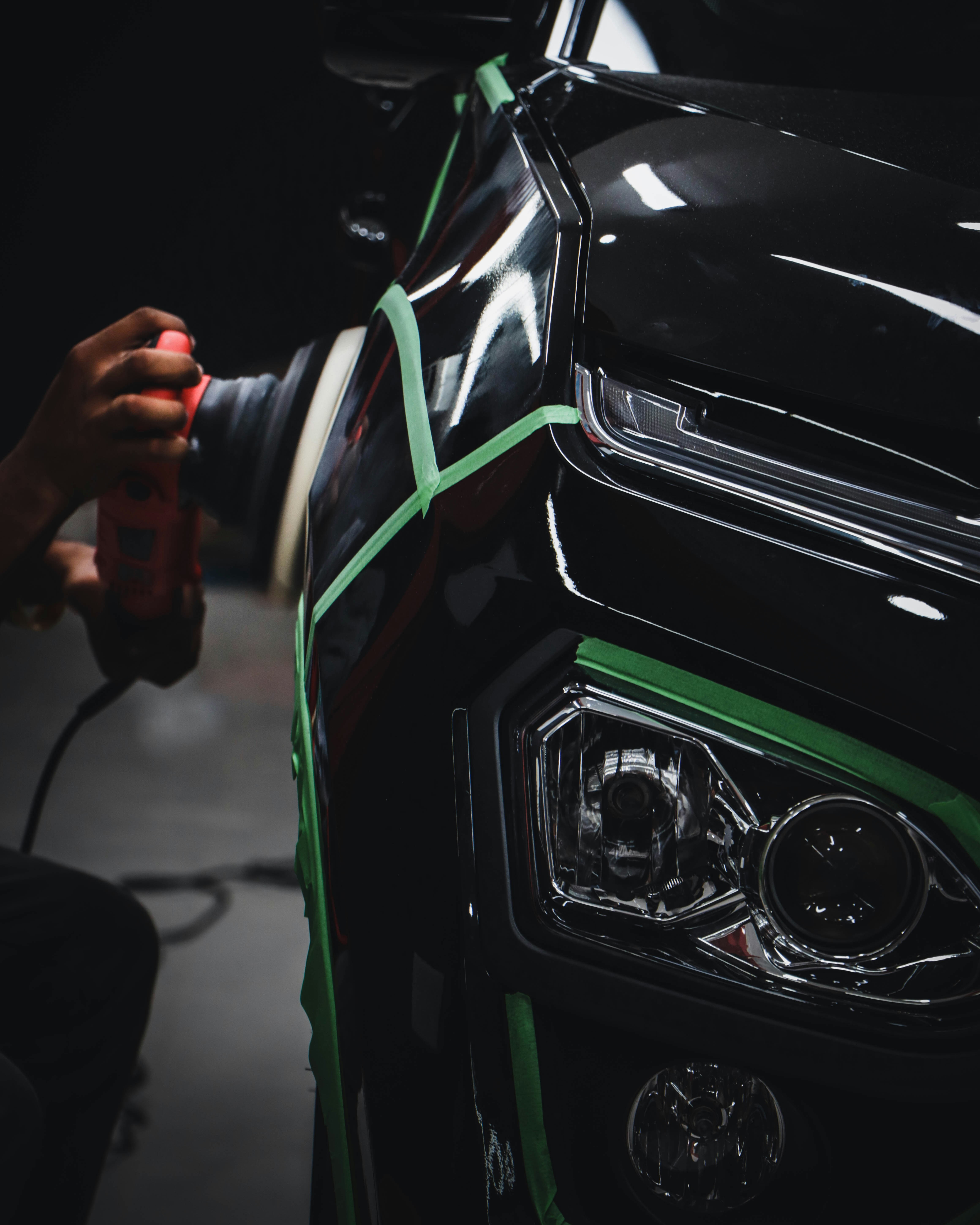
Paint correction is one of the most misunderstood processes in automotive detailing.
To many vehicle owners, "buffing" simply means making the paint shinier. In reality, professional paint correction is a controlled process of refining the surface of a vehicle's paint system by using abrasives, polishing machines, pads, compounds, and finishing polishes to reduce or remove surface imperfections.
The objective is not simply to make a vehicle look shiny.
The objective is to carefully improve the optical quality of the paint while preserving as much of the original paint system as possible.
That distinction is extremely important when a ceramic coating is being installed.
A ceramic coating preserves the condition of the surface underneath it. If the paint is covered in swirls, oxidation, haze, scratches, or other imperfections before the coating is applied, the coating does not magically correct those defects. It can preserve the appearance of what was already there.
That is why professional paint correction requires far more knowledge than simply running a machine over the vehicle.
What Is Actually Happening During Paint Correction?
Modern automotive paint is a layered system.
On a typical vehicle, you have the substrate, primer, color coat, and a protective clear coat. The clear coat is the outermost part of the factory paint system and is what you are primarily working with during conventional paint correction.
When a vehicle develops swirls, wash marks, oxidation, water spotting, or other surface defects, those imperfections change how light reflects from the surface.
A perfectly refined surface reflects light consistently.
A surface covered in microscopic scratches and irregularities scatters that light, making the paint appear dull, hazy, or less clear.
Polishing works by using controlled abrasives to refine the surface and reduce those microscopic imperfections.
In simple terms, you are carefully reshaping the surface so light can reflect more uniformly.
Professional abrasive systems range from very fine finishing products to much more aggressive compounds designed to remove significant defects. The pad, abrasive, machine movement, pressure, working time, and product combination all influence how much correction occurs.
That is why paint correction is a science as much as it is a skill.
Paint Correction Is Not About Removing Everything
One of the biggest misconceptions about paint correction is that a professional should remove every scratch from every vehicle.
That is not always the safest or smartest approach.
Every time you aggressively correct a defect, you are interacting with the vehicle's paint system. The goal should always be to achieve the appropriate level of improvement while maintaining a responsible amount of material.
Some defects are shallow enough to safely correct.
Some require more aggressive compounding.
Some require multiple stages of polishing.
Some may require sanding.
And some defects are simply too deep to safely remove without compromising the paint system.
Professional correction is therefore not a competition to see how many scratches can be eliminated.
It is about making intelligent decisions based on the condition and construction of the vehicle.
Professional coating preparation services commonly distinguish between a light single-stage polish, multi-stage enhancement, and full correction because different paint conditions require very different levels of work.
Why Every Paint System Is Different
This is where experience becomes extremely important.
Not all automotive paint behaves the same way.
Different manufacturers use different paint systems, different clear coat formulations, different application processes, and different levels of hardness or softness.
Even two vehicles from the same manufacturer can behave differently.
One clear coat may respond beautifully to a particular polish and pad combination.
Another may require a completely different approach.
Some paints are relatively hard and resistant to correction.
Others are extremely soft and can be corrected quickly but may require significant refinement afterward.
Some surfaces polish beautifully.
Others can become hazy, sticky, grabby, or difficult to finish.
There are also vehicles with previous bodywork, repainted panels, thin areas, factory inconsistencies, or years of previous polishing.
This is why there is no universal "one polish, one pad, one machine" formula for professional paint correction.
The technician has to read the paint.
Factory Paint Is Not Infinite
Another reason correction needs to be approached carefully is that automotive paint has limits.
The clear coat is not an unlimited reservoir of material that can be repeatedly polished without consequence.
A correction process should therefore be proportional to the vehicle's condition and the customer's objective.
If a vehicle has light wash marks and minor surface imperfections, there may be no reason to perform an aggressive multi-stage correction.
A carefully selected single-stage polish may dramatically improve gloss and clarity while accomplishing the appropriate amount of correction.
On the other hand, a heavily neglected vehicle with significant swirls, oxidation, deeper scratches, and other defects may require substantially more work.
The difference between these two vehicles can be enormous.
That is why one vehicle may require several hours of correction while another may require an entire day or more.
It is not simply about how large the vehicle is.
It is about how much correction the paint actually requires.
What Is a Single-Stage Polish?
A single-stage polish is exactly what it sounds like.
The paint is corrected using one primary polishing combination rather than progressing through several increasingly refined stages.
That does not mean it is a "basic" or low-quality service.
A properly selected single-stage process can produce an enormous visual improvement on the right vehicle.
It can reduce light swirls, wash marks, oxidation, haze, and other minor imperfections while significantly improving gloss and clarity.
The key is selecting the correct combination of abrasive, pad, machine, and technique for that particular paint system.
A professional single-stage polish is often the perfect solution when the paint is already in relatively good condition and does not justify aggressive correction.
In fact, professional coating preparation systems commonly recommend a single-stage polish for new vehicles or vehicles with near-perfect paint when only light refinement is necessary.
When Does a Vehicle Need More?
A vehicle with heavier defects is a completely different situation.
If the paint has substantial swirls, deeper scratches, oxidation, sanding marks, or significant surface degradation, a single-stage polish may not provide enough correction.
This is where multi-stage correction becomes appropriate.
A more aggressive compound may first be used to remove or reduce significant defects.
A medium polish can then refine the finish.
A final finishing polish can further improve clarity, gloss, and optical refinement.
Severe correction can involve even more stages, including localized sanding in appropriate situations.
The important point is that more correction is not automatically better.
Every additional stage needs to have a reason.
Professional correction systems often use increasingly aggressive abrasive steps depending on defect severity, followed by progressively finer polishing to refine the finish.
The best correction is the correction that achieves the desired result without unnecessarily removing material.
Why "Buffing" Is an Oversimplification
The word "buffing" makes paint correction sound simple.
Put a machine on the paint.
Apply polish.
Move it around.
Wipe it off.
The reality is considerably more technical.
A professional technician is constantly evaluating:
Paint hardness.
Defect depth.
Paint thickness.
Pad behavior.
Abrasive behavior.
Machine movement.
Heat generation.
Working time.
Panel shape.
Previous repairs.
The quality of the finish after each step.
A technician may make a test section using one combination, inspect the result, and then change the pad or polish depending on what the paint is telling them.
That process is called test-spotting, and it is one of the most important parts of professional correction.
You do not want to guess what the paint needs.
You want to test it.
The Importance of Paint Thickness
Professional correction should also involve awareness of the amount of paint available to work with.
Paint thickness measurements can provide valuable information, particularly on vehicles that have been repainted or heavily corrected in the past.
This becomes especially important when considering aggressive correction.
A vehicle with a healthy original paint system may offer more room for correction than a panel that has previously been refinished or heavily polished.
This is another reason professional correction cannot be priced simply by saying, "Every car gets the same polish."
The technician needs to understand what they are working with before determining how aggressively they should approach it.
Why Paint Correction Matters Before Ceramic Coating
This is where paint correction becomes particularly important to GHOSTPHORM.
A ceramic coating is designed to protect and preserve the surface it is applied to.
It is not a body shop.
It is not a scratch remover.
It is not a paint correction product.
It does not make defects disappear.
If the paint has imperfections before coating, those imperfections can remain visible underneath the coating.
That is why proper preparation is so important.
Before a professional ceramic coating is installed, the vehicle should be thoroughly cleaned and decontaminated, the paint should be evaluated, defects should be addressed appropriately, and the surface should be properly prepared for the coating.
The goal is to give the coating the best possible surface to protect.
Every GHOSTPHORM Coating Includes Light Paint Correction
This is an important distinction in how we approach ceramic coating.
Every GHOSTPHORM coating package includes a light single-stage polishing process.
That means every vehicle receives more than simply a wash, decontamination, and coating application.
We refine the paint before the coating goes on.
The purpose is not to promise that every scratch on every vehicle will disappear.
The purpose is to improve the condition of the surface, enhance gloss and clarity, reduce appropriate light defects, and prepare the vehicle for its new protective system.
For vehicles requiring substantially more correction, additional paint correction can be performed based on the condition of the paint and the result the owner wants to achieve.
That is where a professional consultation matters.
Your vehicle should not be placed into a predetermined correction package simply because that is what the shop always does.
The vehicle should determine the process.
The Ceramic Primer Polish
After the initial correction and refinement, GHOSTPHORM takes preparation one step further with our ceramic primer polishing process.
This is a dedicated final polishing stage designed specifically to refine the surface immediately before ceramic coating installation.
The purpose is different from aggressive defect removal.
At this stage, we are focused on creating an exceptionally clean, refined, high-clarity surface that is ready for the coating process.
The importance of this final stage is easy to overlook.
After polishing, the surface can contain microscopic polishing residue and oils that need to be properly removed before a coating is installed. Professional surface-preparation products are specifically designed to remove polishing oils and residue and reveal the true condition of the surface before coating application.
A coating should not be treated as the final step of a quick detail.
The surface underneath it needs to be deliberately prepared.
Two Different Goals. One Complete Preparation Process.
The two polishing stages serve different purposes.
Light Single-Stage Polish
This is about improving the condition of the paint.
It addresses appropriate light defects and enhances gloss, clarity, and overall appearance.
Ceramic Primer Polish
This is about final refinement and coating preparation.
It prepares the surface for the ceramic coating process and helps ensure the paint is in the appropriate condition before protection is installed.
Together, they create a more complete preparation process than simply washing the vehicle and applying a coating.
And that distinction matters.
Because when you are investing in professional ceramic coating, you should not only be asking what is inside the bottle.
You should be asking:
What happens to my paint before the bottle ever comes out?
Why Correction Pricing Can Vary So Dramatically
This is also why professional paint correction can range significantly in price.
A brand-new vehicle with excellent paint may require relatively little correction.
A three-year-old vehicle with moderate wash damage may require considerably more.
A ten-year-old black vehicle that has spent its life through automatic car washes may require an entirely different level of work.
A vehicle that has been repainted or previously corrected may require even more careful evaluation.
The vehicle's condition determines the process.
The process determines the labor.
The labor determines the cost.
This is why comparing paint correction based strictly on price can be misleading.
Two shops may both say "paint correction," while performing completely different levels of work.
One may perform a quick enhancement.
Another may spend an entire day carefully correcting and refining the paint.
The terminology can be identical while the process is not.
Paint Correction Is About Preservation, Not Perfection at Any Cost
The goal of professional paint correction is not to chase every microscopic imperfection until there is nothing left to correct.
The goal is to find the appropriate balance between appearance, correction, safety, and preservation.
Sometimes that means removing 90 percent of visible defects rather than chasing the final 10 percent.
Sometimes the right answer is a light polish.
Sometimes it is a multi-stage correction.
Sometimes a scratch should simply be left alone because removing it would require compromising too much of the surrounding paint.
That is not a failure.
That is professional judgment.
The best technicians know not only how to correct paint.
They know when not to correct it.
The GHOSTPHORM Standard
At GHOSTPHORM, we do not believe every vehicle should receive the same correction process.
We believe every vehicle should be evaluated individually.
Different manufacturers.
Different paint systems.
Different ages.
Different environments.
Different maintenance histories.
Different levels of damage.
Different customer expectations.
All of those factors matter.
That is why every GHOSTPHORM ceramic coating package includes a light single-stage polishing process followed by our ceramic primer polishing process.
It gives every vehicle a level of paint refinement before coating that goes beyond simply cleaning the surface and applying protection.
If the vehicle requires more extensive correction, we can determine the appropriate level based on the actual condition of the paint.
Because ceramic coating is not about covering up the condition of your vehicle.
It is about preserving it.
And the better the surface is before the coating goes on, the better the finished vehicle can look and the better foundation we have for long-term protection.
The paint determines the correction.
The correction determines the finish.
The finish becomes the foundation for the coating.
That is paint correction done properly.
GHOSTPHORM
CERAMIC COATING. PERFECTED.
The Standard in Ceramic Coating.